Md. Shakawath Hossain

Intellectual Property (IP) Framework

Government Copyright Registered • CRL-33364Intellectual Property (IP) Framework

Shakawath’s Six Control Points
for Food Cost Optimization

FRAMEWORK DESCRIPTION / STATEMENT OF AUTHORSHIP — An original professional framework and written work authored, innovated, introduced, and implemented by Md. Shakawath Hossain (CEO, Unique Hotel & Resorts PLC). Documented across three 5-star properties with proven annual operational savings of approximately BDT 2 Crore.

Annual Savings

~BDT 2 Cr

Proven operational cost reduction

Properties Active

3 Luxury Hotels

The Westin, Sheraton & HANSA

Academic Adoption

Dhaka University

Tourism & Hospitality Dept.

Intellectual Property

CRL-33364

Bangladesh Copyright Office

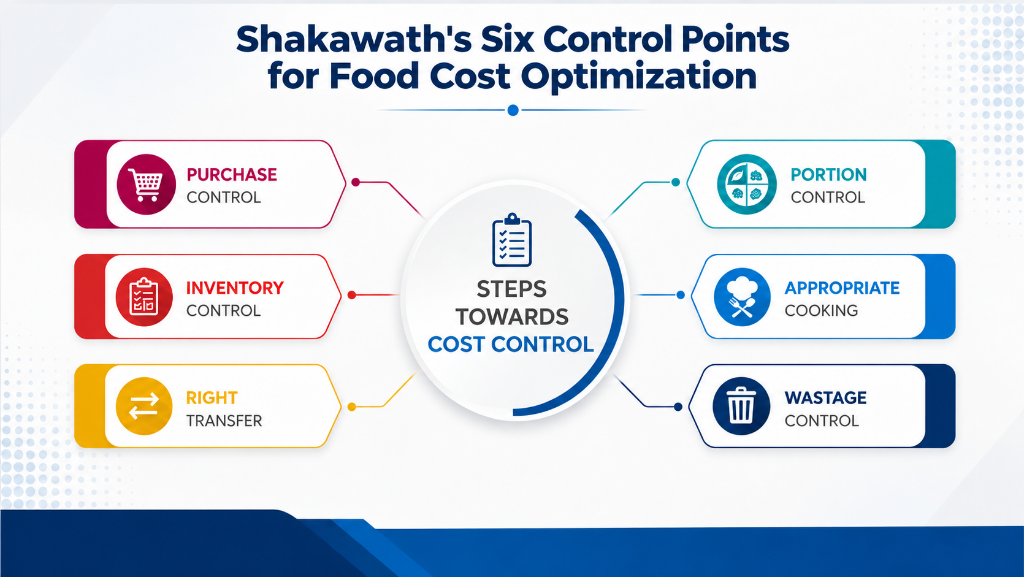
Shakawath's Six Control Points for Food Cost Optimization Diagram

Documented Framework Identification & Statement of Authorship

Title of Documented FrameworkShakawath’s Six Control Points for Food Cost Optimization
Proprietor / InnovatorMd. Shakawath HossainCEO, Unique Hotel & Resorts PLC
Copyright NumberCRL-33364Bangladesh Copyright Office
Nature of WorkOriginal professional framework and written work documenting a hospitality cost optimization concept
Associated FrameworkPurchase Control, Inventory Control, Right Transfer, Portion Control, Appropriate Cooking, and Wastage Control
Field of UseHospitality, Food & Beverage Management, Cost Optimization, Training, Consultancy, Business Advisory, Operational Improvement Services, Research, and Academic Discipline
Section 1

1. Executive Summary

Six Control Points for Food Cost Optimization is a practical and measurable Food & Beverage cost optimization initiative innovated and implemented by Md. Shakawath Hossain, CEO of Unique Hotel & Resorts PLC. Mr. Hossain has also obtained copyright registration for the Six Control Points for Food Cost Optimization framework.

The initiative supports sustainable hospitality by preventing food loss before it occurs. Forecast-based purchasing, disciplined inventory, controlled transfers, standardized portions, yield-focused cooking, and waste monitoring help reduce avoidable over-ordering, expiry, overproduction, and disposal while protecting food quality and guest experience.

The model has already been practiced across three hospitality properties: The Westin Dhaka, Sheraton Dhaka, and HANSA - A Premium Residence. Through disciplined implementation, the company has achieved proven annual operational cost savings of approximately BDT 2 crore.

The combination of better use of food resources, waste prevention, and documented savings demonstrates both environmental responsibility and economic sustainability. The initiative is supported by training, gatekeeper-based accountability, measurable parameters, standard formulas, review schedules, documentation, and corrective action tracking.

Section 2

2. Description of the Framework

Shakawath’s Six Control Points for Food Cost Optimization is an original professional framework and written work authored, innovated, introduced, and used by Md. Shakawath Hossain to document a Food & Beverage cost optimization concept developed for the hospitality industry.

The work represents a structured six-part operational model designed to help hotels, restaurants, resorts, catering businesses, and Food & Beverage operations improve cost efficiency, reduce wastage, strengthen operational discipline, protect profitability, and maintain sustainable business performance without compromising food quality, service standards, or guest satisfaction.

Section 3

3. Background and Purpose

In the Food & Beverage business, sustainable growth is not achieved only by increasing sales. It also depends on protecting every point where cost can leak, value can be lost, and profitability can be weakened. Food cost optimization is therefore not only a financial practice, but also an operational discipline that requires proper control over purchasing, storage, transfer, production, service, monitoring, and wastage.

Shakawath’s Six Control Points for Food Cost Optimization was developed as a practical and scalable framework to support Food & Beverage businesses in building accountability, reducing avoidable losses, improving efficiency, and strengthening long-term profitability. The framework is designed to be followed by hospitality businesses of different sizes, including hotels, resorts, restaurants, banqueting operations, catering businesses, and other Food & Beverage service providers.

Section 4

4. The Six Control Points

The framework described in this document is based on the following six control points:

11. Purchase Control

Purchase Control is the first line of protection in Food & Beverage cost optimization. It focuses on purchasing the right product at the right time, at the best possible price, and from reliable suppliers without compromising quality. This control point includes market comparison, supplier evaluation, negotiation, purchase planning, vendor lead-time monitoring, quality assurance, and proper purchasing discipline. Poor timing, weak bargaining, over-ordering, or accepting low-quality products can directly affect both profitability and guest experience.

22. Inventory Control

Inventory Control ensures that every stored item is properly received, recorded, stored, monitored, and used before expiry. It emphasizes FIFO, meaning First In, First Out, proper dry and cold storage, stock monitoring, expiry control, inventory variance review, and analysis of high-consumption items. Since every stored item represents money, proper inventory control helps reduce spoilage, avoid unnecessary loss, protect product quality, and improve cost accountability.

33. Right Transfer

Right Transfer ensures that Food & Beverage items are moved accurately from one operating area to another, such as from store to kitchen, kitchen to outlet, outlet to event, or one service area to another. This control point focuses on stock checking, requirement validation, proper recording, and consumption planning. It also encourages a dynamic consumption approach, where production and transfer decisions are based on guest behavior, item popularity, meal period, event type, and forecasted demand. This helps avoid both shortage and wastage.

44. Portion Control

Portion Control directly affects profitability, consistency, and guest experience. Even a small difference in portion size can create a major cost impact when repeated across hundreds or thousands of covers. This control point focuses on standard recipes, correct plating, buffet portioning, consistent serving sizes, and proper service control. The objective is not to reduce guest satisfaction, but to ensure that every guest receives the right quality, quantity, and experience while the business protects its margin.

55. Appropriate Cooking

Appropriate Cooking focuses on correct recipe execution, proper use of ingredients, suitable equipment, accurate heating temperature, standard cooking methods, and careful production planning. Overuse of ingredients, spices, oil, or other resources can increase cost, create wastage, and affect taste consistency. This control point supports food safety, taste, presentation, recipe discipline, maximum food yield, and overall cost efficiency.

66. Wastage Control

Wastage Control is one of the most important areas of Food & Beverage cost optimization. It focuses on reducing avoidable waste through proper forecasting, historical footfall review, weekday and weekend demand analysis, meal-period planning, buffet control, production adjustment, and waste tracking. Food production should be aligned with expected demand while maintaining freshness, quality, safety, and guest satisfaction. Before any item is discarded from the hotel premises, it must be properly checked, verified, and segregated as per hospitality standards to ensure final-stage wastage control and accountability. This control point helps reduce overproduction, manage waste responsibly, and ensure efficient use of operational resources.

Section 5

5. Contribution to Sustainable Tourism

The initiative contributes to sustainable tourism by preventing waste at every stage of the food cycle. Demand-based purchasing, FIFO and expiry monitoring, controlled transfers, standardized portions, yield-focused cooking, and waste tracking help limit excess purchasing, spoilage, overproduction, and unnecessary disposal.

This provides environmental value by reducing avoidable food waste and improving how fully purchased ingredients are used. It also supports economic sustainability: documented operational savings of approximately BDT 2 crore per year strengthen the long-term viability of hotel Food & Beverage operations without compromising quality or guest experience.

The framework encourages seasonal local sourcing where suitable, which can reduce reliance on imported products and strengthen relationships with local farmers and suppliers. Training across hotel teams and incorporation into the University of Dhaka curriculum extend the practice to current and future hospitality professionals, supporting long-term continuity and wider adoption.

Section 6

6. Scope of Use

Shakawath’s Six Control Points for Food Cost Optimization may be used in connection with:

  • Hospitality consulting and advisory services
  • Food & Beverage cost optimization services
  • Hotel, restaurant, resort, and catering business improvement services
  • Leadership training and professional development programs
  • Food & Beverage management training modules
  • Operational guidelines, manuals, and standard operating frameworks
  • Publications, articles, presentations, and research-based materials
  • Workshops, seminars, lectures, and educational sessions
  • Menu engineering, food cost calculation, supervision, monitoring, and profitability improvement services
  • Business advisory services related to sustainable Food & Beverage profitability
  • Research and development related to cost control, operational efficiency, and hospitality innovation.
Section 7

7. Original Identity of the Work

This documentation is intended to record and distinguish the professional framework, materials, and business advisory concept developed and introduced by Md. Shakawath Hossain. The work carries the innovator’s name and directly connects the framework to his professional contribution in hospitality cost optimization.

The work does not merely describe general food cost control. It documents a specific six-control-point framework under the professional identity of Md. Shakawath Hossain. It represents a structured and recognizable approach to Food & Beverage cost optimization, combining operational control, financial discipline, quality protection, guest experience, and sustainable profitability.

Section 8

8. Current Status and Future Scalability

Currently, the Six Control Points initiative is in practice across The Westin Dhaka, Sheraton Dhaka, and HANSA - A Premium Residence. It has also been incorporated into the academic curriculum of the University of Dhaka, extending the framework from hotel operations into formal academic learning.

The initiative is documented through articles, training materials, a framework description, an implementation system, measurable formulas, gatekeeper responsibilities, action plans, review schedules, and scorecards. The next phase is planned nationwide implementation across Bangladesh through the hospitality, tourism, training, and academic sectors. Following national implementation, the framework is intended to expand internationally through suitable hospitality organizations, training institutions, and academic partnerships.

Six Control Points for Food Cost Optimization directly aligns with the Best Sustainable Tourism Initiative of the Year category because it connects food-waste prevention and efficient use of ingredients with measurable economic benefit, staff training, and repeatable operating controls. Its use across three hotels, incorporation into the University of Dhaka curriculum, and planned national and international expansion demonstrate practical scalability. Through this initiative, Md. Shakawath Hossain has introduced a structured model for more responsible and financially sustainable Food & Beverage operations in Bangladesh's hospitality and tourism sector.

Section 9

9. Statement of Authorship and Ownership

Md. Shakawath Hossain is the creator, author, and innovator of Shakawath’s Six Control Points for Food Cost Optimization. The documented framework is used and intended to be used as the written expression and identifying title of his professional Food & Beverage cost optimization framework, training module, advisory material, publication, presentation, and related hospitality business improvement content.

This establishes the authorship, identity, source, and professional ownership of the framework and distinguishes it from other general cost-control practices in the hospitality and Food & Beverage industry.

Official Documented Framework PDF

Six-Control-Points.pdf (1.6 MB)

Download the complete copyrighted statement of authorship, operational implementation system, and framework description.

Download PDF Now

Connect

Let's Connect for Leadership, Collaboration,
and Strategic Opportunities

For professional collaboration, hospitality initiatives, tourism development, business opportunities, or media communication, get in touch.

Contact Now